By James Furlo on
How I Purchased The Tallest Building in Oregon East of the Cascades | Ep 94

Listen to the Podcast
Show Notes
- 00:00 Intro
- 00:29 The Journey to Acquiring Baker Tower
- 02:32 Financial Breakdown and Investor Insights
- 05:14 Historical Significance and Future Plans
- 12:24 Unique Heating and Cooling System
- 15:33 Unique Condo Structure and HOA Considerations
- 16:49 Selling Strategies for Different Floors
- 17:45 Managing the Property Remotely
- 18:53 Local Market and Housing Demand
- 20:04 Business Plan and Property Management
- 20:41 Occupancy Rates and Tenant Stability
- 21:28 SEC Rules and Investment Structure
- 23:10 Insurance and Environmental Challenges
- 29:11 Final Thoughts and Future Plans
7 Key Lessons
- Think tall, start small: James's first syndication deal wasn't a skyscraper of cash, it was a marathon of learning. The best way to get big in real estate is to start building deal by deal.
- Don't fear the weird deal: Baker Tower was "too unique" for banks and insurers, but that uniqueness created opportunity. The best returns often come from properties others don't know how to value.
- Creative financing beats deep pockets: Selling a cell tower easement for $400K upfront turned an impossible down payment into a done deal.
- Your risk isn't just the property, it's the paperwork: The environmental report nearly tanked the deal until James reframed the liability argument. Sometimes, good communication saves thousands.
- Leverage exit flexibility: Each floor being a separate condo means multiple exit paths—whole building, per floor, or mixed use. Always buy with optionality.
- Systems scale distance: Managing a 10-story property six hours away works when you have local partners and solid processes. Systems make scaling geography possible.
- Hold for the long view: A 10-year hold plan turns hype into sustainable returns. Cash flow pays today; appreciation pays your future self.
Watch the Podcast
Read the Transcript
Speaker: We just bought the tallest building in Oregon, east of the Cascades, and we're gonna talk all about it today on the Furlo Capital Real Estate Podcast, where we dive into the intricacies of passive real estate investing. And our mission is to equip people to invest wisely in both properties and peoples, especially really tall properties, so that together we can build wealth while improving housing.
I'm
Speaker 2: James,
Speaker: and this is my wife, Jessi.
Speaker 2: This sounds so exciting. I've, I mean, I've been hearing, of course, all along the way of different
Speaker: pieces of this, but. Do you have a guess on how long I've been working on this particular deal?
Speaker 2: Well, is this like from the first offer or, sure. Whatever. I don't know. Couple years a year?
Speaker: Well, I found out about the property probably a year and a half ago. Okay. Put it in an offer probably four or five months ago. Okay. Yeah. So it's been a deal in work. It is my first official syndication. Yes. So I've got a group of investors who have. Have gone on, have gone into it with me. Yeah. And it's super, super cool.
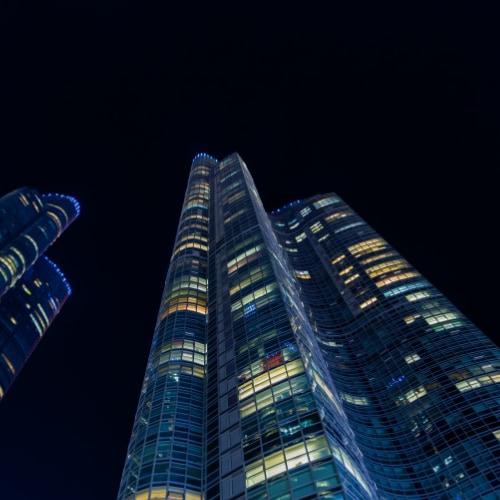
It is cool. If you're watching this on video Daniels, I'm gonna have you put some B roll here so you can see pictures of it. It's super cool. It is. It is 10 stories tall. Yeah, it's very cool. So there's actually nine stories of like rentable space. Mm-hmm. And then there's kind of a cupola. CAPA Cupola.
Cupola. Yeah. Yeah, up at the top. But there's all like cell tower equipment Yeah. Up there. And so it's got all sorts of really cool stuff to it. So. Okay. So first floor it has a talco shop for starters. Yeah. Which is delicious, but it also has a lot to love fireside room and a ballroom, because this used to be a hotel, it was the old Baker City Hotel.
Oh, I should say the name. It's called the Baker Tower.
Speaker 3: Yay.
Speaker: You can actually go to Google site, search for the Baker Tower or just Baker Tower and. You'll see it.
Speaker 2: I think they're, they have a website that has like information about it. Yeah, they did.
Speaker: They've now taken it down. Oh. Now that I've bought it, I think that was So you have to
Speaker 2: do your own website
Speaker: apparently.
Yes. I think it was a, they actually had a whole bunch of really cool historic photos on there, and so I kinda wanna reach out and be like, Hey, can I Yeah. Get those. Yeah I went to the web archive and I got a lot of 'em. Interesting. But but yeah. But anyways, yeah. Had a cool website. It's gonna have an even cooler website.
There you go. A little bit. And yeah. So anyways, ballroom first floor. Mm-hmm. Then there's an elevator 'cause it's super tall and like the first five floors are all like commercial mm-hmm. Type of stuff. And then floor 6, 7, 8, 9 are residential, like I said. Then 10 is there's some cell towers Yeah.
That are up on top. And this was a, a crazy deal. So one of the things that we did, and we actually talked about this in a previous episode, was one of the cell towers we were able to sell.
Speaker 3: Mm-hmm.
Speaker: And so instead of collecting rent. Over time, I essentially got a big cash payment upfront, and now there'll be another company who collects the rent, excuse me, over time, and that went towards the down payment.
So that was $400,000 towards the down payment, which was fantastic, which meant I only had to come up with. $230,000 for the remainder of the down payment. But there's also some other projects and things like, there's some roofs that need to be replaced and fixed and we wanna have a reserve account and all sorts of stuff.
So I ended up raising $550,000 Okay. To purchase this 100, no, this $1.65 million property. And so, yeah. So super exciting. Yeah. We, we like, we just recently closed on it. Yeah. And it was it was a herculean effort to get there. Mm-hmm. And I kept thinking like, oh my gosh, this is like to the starting line.
Yeah. Now the marathon begins.
Speaker 2: I remember that. Yeah. There was just a lot of back and forth that seemed like with, you know, you doing due diligence, asking questions, going to visit the place. Mm-hmm. Mm-hmm. And then there was, that's when the negotiations. Started where it was like, okay, we gotta work through this.
Speaker: Yeah. So I initially offered him 1.8 million. Mm-hmm. Which is what he was asking for it. And then I got over there and you know, did the six hour drive mm-hmm. Over there and spent a day. Like a solid day. Mm-hmm. I got there the night before, spent the entire day mm-hmm. Just running around all over the property.
Mm-hmm. With one of my brokers. And we looked at everything. I actually have a, a, I made a 360 oh degree video. Yeah. Showing everywhere. Yeah. Well not everywhere. 'cause there was some places that they were like, don't, a video on your sure. So I didn't, but but yeah, so it's like it's over an hour.
Maybe,
Speaker 2: maybe you should link to some B roll. Have some B roll or something. Or the top that's like
Speaker: Daniel, you hear that you wanna link, I want you to link to that. Just the top. The top. That's like, oh yeah. Ooh. Yeah. So we went onto the roof, gives you the willies and the roof is sloped and it's 10 stories up.
Yeah. It's, and like, can you feel it, man, high. It's I definitely was like, oh yeah. Interestingly, so we went up there. First thing. Then later on we had a roofer come to look at the roof, and I was actually a lot better the second time round. I was like,
Speaker 2: oh
Speaker: yeah, I got this. Oh, I've been here, I've done
Speaker 2: this before.
Not a big a deal. Yeah. Nope. I'd still be nervous.
Speaker: It's still still really tall. But yeah. When you look at it in if you throw in some VR goggles and look at it like.
Speaker 2: Yeah. It,
Speaker: it's, you're like, oh man, you get the butterflies.
Speaker 2: Yeah. You get the, because at one point we take the camera and
Speaker: we put it over the edge Yeah.
To look at it. You wanna
Speaker 2: stabilize yourself.
Speaker: Yeah. This was the building that was built in 1929, I think. Mm-hmm. So we're coming up on a hundred years.
Speaker 2: Yeah.
Speaker: Just kind of fun. And my goal is to own it for a really long time. I'm, I mean, I love doing it forever. Sure. But the current plan with the investors is it's a 10 year hold.
Mm-hmm. And then sometime within the 10 years we're gonna refinance. Yeah. And kind of, depending on when that happens, some of it has to do with interest rates and some of it has to do with different ways that we're going to increase the revenue. Mm-hmm. Of this property. Like for example, right now the fireside and the ballroom are empty.
Mm. And my plan is to create an event space Yeah. For it. And and they
Speaker 2: haven't been being rented
Speaker: out? Correct? Yeah. Okay. They've just been empty. And then and then the ninth floor currently has a long-term tenant in there. Mm-hmm. And I'll probably create some financial incentives for them to move on.
Mm-hmm. And then we're gonna turn it into a vacation rental. Yeah. Because it, vacation rentals are, are interesting because. I mean, there was this time period where it was like, oh, you buy any random house in any random neighborhood? Sure. And you can rent it out. It's awesome. And that has become a lot less the situation.
Now you need to have a reason for them to go. Mm. And like, and it could be something about the city itself. Mm-hmm. Like we're in Corvallis, there's OSU, they do a lot of sports stuff. So Sure. A random house could reasonably work. But you want some sort of attraction. Mm-hmm. And or you want the property itself to be intrinsically interesting.
Yeah. That makes sense. Remember when we went to Spain, one of the Airbnbs we chose kinda had this forest theme. Yeah. What about it didn't matter. It was, it was, it was a random place in the middle of the city, but but we chose it 'cause we're like, oh, this looks cool. Yeah. So this one on the ninth floor has an inherently like.
360 degree view of the valley. Yeah. That's cool. It's very cool. And that's obviously what we're gonna highlight and go for. Yeah. And plus
Speaker 2: the, I mean the history of Baker City just in and of itself that is, is interesting for people. You know, and there's things to do around there. Fishing, yeah. Hiking, that kinda stuff.
So,
Speaker: yeah, no, totally true. Like I said, it was originally a hotel. Mm-hmm. And it was a hotel back when they filmed the movie. Paint Your Wagon. Mm. And and so that was where the cast and crew stayed during the filming of that movie. So Clint Eastwood has stayed in this building, dude, which to some people is cool and others are like, okay, alright, that's less cool.
So yeah, so pretty cool. Painter Wagon is one of my uncle's favorite movies of all time, so he's like, he's super pumped for me. He said not to come stay. But yeah. Super cool. I kind of wanna run through some of the, the numbers and ratios mm-hmm. Of this thing. Essentially when I, when I do a deal like this I put together a webpage.
Mm-hmm. Oftentimes investors have slide decks that they make, and that's cool, but I'm cooler. So I do a website and I can embed videos and pictures and spreadsheets mm-hmm. And link out the stuff and it's just, yeah. It's just cool. Yeah. It's more dynamic. And so so it starts off with me talking about how awesome it is.
So yeah, bought it for 1.65 hold period is for 10 years. And the total cost of the project, I had it at 1.97 million. So just under two again, 'cause we've got some stabilization stuff. We're gonna put about $150,000 into making it better. Okay, sure. Part of it is like buying tables and chairs Yeah. For the event space and buying beds and stuff.
For the vacation rental. Sure. Most of it's going to the roof. I, I have some, so there's some, some ratios. Mm-hmm. Which, if you listen to last week, you know, ratios are really important. I've been telling everyone, so there's like. The top line numbers, there's your annualized return, which is like what you get for your return on investment over on average.
Mm-hmm. Over time, your cash on cash return, your equity multiple, and then your internal rate of return.
Speaker 3: Okay.
Speaker: And your internal rate of return is essentially your annualized return, but taking into account time. Mm. So in theory, it's, it's typically lower mm-hmm. Than your annual return. And then your equity multiple is, it's just your return on investment, but.
Not as a percentage. So so in this case the annualized return is 18%, which is great. But oftentimes those returns are goosed by you selling the property at the end of the day. And so this is one where if you wait 10 years, the building slowly goes up in value over time. Mm-hmm. So you're gonna sell it for more.
Again, it doesn't take into account time. Mm-hmm. And so the longer you hold onto it, the longer your annual return is gonna be.
Speaker 3: Mm-hmm.
Speaker: So you wanna take into account time, which is where you get your internal rate of return. Mm-hmm. So that's 13%. As a general rule, like that's pretty good. Mm-hmm. That's a, that's a good return.
And that's the kind of thing that you can compare that ish to the stock market ish. Mm-hmm.
Speaker 2: So what you're telling me is if I invested some X amount of dollars, I would get 13% back
Speaker: on top of that? No your actual return, so your equity multiple in this case is 2.8 to X. So this is saying if you invested a hundred dollars, you would get $2 and 80 cents back.
Eventually, which is a great return. Right? Okay. But you gotta wait 10 years to get it.
Speaker 2: Is that a great return?
Speaker: If No, well, if you were to think of it in terms of like like the stock market, maybe you get like 8%. If you put a hundred dollars in, you get $8 back. Mm-hmm. I'm saying, well, you get a dollar eight back.
Does that make sense? You get your original dollar Oh yeah. Plus your $8. Sure. So you get, it'd be a, a 1.8. Mm-hmm. This is a 2.8. So it's saying if you put a dollar in, you'll get $2 and 80 cents back. Like it's great. You just gotta wait to get it. Sure. That's the trick, which is why that internal return is so important.
But what I've been telling everyone to pay attention to is the cash on cash. Mm-hmm. Which is the 8%, which is the returns solely from collecting rents. Mm-hmm. It's totally ignoring an eventual sailor refinance of the property.
Speaker 2: That's what I like because.
Speaker: Like, I wanna hold onto it forever. Yeah. So I don't care about that.
Yeah. Which 8% is not amazing. It's not like, was that like our very first duplex that we bought was 52%? Yeah. That's crazy. It was off the hook. Yeah. In this case it's not that, but but honestly, it's gonna be a, it's stable. Mm-hmm. It's consistent and it's backed by something real that you could eventually sell.
Yeah. If you wanted to get more out of it and, like I said, it is the tallest building east of the Cascades. Which is cool. Let's see here. There's about 35,000 square feet, so it's by far the biggest buildings enormous that I bought just in terms of like size, because our our apartments are 10,000 Okay.
Square feet to put it in. That puts it in perspective. Yeah. It's four times that size. But interestingly the apartments are, where is this number? I don't think I wrote it down anywhere. Our apartments are 11 units. Mm-hmm. This one, geez, I didn't write it down. Anywhere is, let's, right there is 20. If you include the cell towers, it's 23 units.
If you get rid of 'em, it's 21 units. Okay. I think they count, they're like tenants. They pay rent. Sure. I don't know, it's kinda a weird so yeah, so it's four times the size, but only twice as many tenants. Interesting. Which it's the commercial stuff, right? Right. It just takes a Yeah. It's
Speaker 2: a tremendous amount of space, bigger spaces.
Speaker: Yeah. Let's see here. What is interesting about it? Oh one of the really fascinating things is the heating and cooling system in the building. Mm-hmm. I, I had to learn a whole lot about that. Yeah. More than I ever thought I would have to learn. Mm-hmm. So in big towers like this, not everyone has.
Well, they each have individual units, but it's, but it has a unified system. Mm-hmm. So there's actually a, there's a set of pipes that's like a loop that go up and down the entire building. Mm-hmm. And inside these pipes are, are water, and it's a big heat pump system. Mm-hmm. So when, there's a bit of black magic here that happens, but there's a cooling tower mm-hmm.
That's on top that essentially cools down the water.
Speaker 3: Mm-hmm.
Speaker: Okay. And then the the heat, the boiler, the heat systems inside each room. Pull the, take that hot water or take that cold water and use that to cool off the room. They essentially extract the cold out of it to cool down the air. They use the cold water to cool down the air, and then they blow it in the room.
So that's how you cool off the room? Sure. Yeah. I know. Another way to think about it is in the basement they can flip a switch and they can turn on some boilers, which then. Heat up the water, now you have hot water running through the pipes. Mm. And now these units grab the hot water to heat up their elements, kind of, and then they push hot air into the rooms.
Hmm. So it's kind of like, that's weird. Everyone is either using their heaters or their air conditioner. That's kind of the choice. Yeah. Now this building back when. Back in 1929 when they were even built, almost none of 'em had a cooling mechanism. It's just a heater. So this one is actually like, for time was very cutting edge.
Interesting. Today it's less so, and it's original to the 1929. I feel like the cooling towers was added. Okay. After the fact.
Speaker 2: Yeah.
Speaker: But yeah, that the system wow, is original. And interestingly, you can't just do like a ductless system because it's a historic building. They're not gonna let you put a bunch of these heat pump things.
All over the place. And you can't just put 'em all on the roof because they can't reach the upper floors. 'cause the, those systems can only go so far. Oh. And so you'd have to like, stick 'em to the side of the building and they're like, yeah, no, not, you're not allowed to. You won't to do that. Won't. So kind of stuck with this system.
Yeah. But yeah apparently this was a source of a lot of trouble for the current owner. 'cause people kept trying to use the systems in such a way that it didn't work. And and once I learned about it, I was like, oh, like. The system works. Yeah. You just have to, you just, there's an education here. Get everybody on the same page.
Everyone know, Hey, heaters are on. Don't try to cool off your place. Yeah, sorry. And I think part of what I'm gonna do is I'm gonna say, yeah, just buy a space heater and like, if you wanna heat up your room. Di of winter, it'll always work. But like when we're in that, it's, you're in the fall and spring, it gets a little weird.
Sure. That's what I'm like, Hey, we're gonna have the cooling tower on. Mm-hmm. So use a space heater in the morning and then in the afternoon, just turn on the main thing and you'll be fine.
Speaker 3: Mm-hmm.
Speaker: Yeah, I don't even think window units are allowed. 'cause that's a, that's a heck of a fall. Let's see what else is, oh, here's another really interesting thing about it that made it a fascinating, a buy is each individual floor is technically a separate condo.
Speaker 2: Yeah, I, I remember you saying that around, I was like,
Speaker: oh, we had to, you could sell a floor, we could sell it to 10 different people.
Speaker 2: That is so weird to me. Like I, the whole concept of condos in general is weird to me. 'cause it's like. You still share the building, like you don't really
Speaker: own, we just have an HOA, that's all.
Yeah. So, so that's, that's why HOAs exist, right? Because you have all the shared stuff. So you create a centralized organization that governs here's how everyone uses all the thing. Use the rules. Yeah, yeah, yeah. So this's the same thing. It's just instead of it being. Individual homes, they're, they're all connected.
This doesn't have an HOA 'cause it doesn't need one, 'cause it has a single owner. Mm-hmm. But if we decided to break it up and sell it, and that's like my first choice would be eventually to find just a single owner. Yeah. Sell it to them. But if, if that for whatever reason doesn't make sense, we would form an HOA and then sell off all the different parts.
Mm-hmm. So it gave me multiple exit strategies, which, which I really liked. Hmm. So
Speaker 2: if you Yeah. Would you, if you, Hmm, how would I say this? If you were gonna sell different pieces of it, do you think you would group different floors, I guess to be like a commercial buyer and a residential type of buyer or something like that?
What
Speaker: was cool about it? So like that top floor, that'd just be like a single family home essentially. Sure. The rest of the residential ones are all duplexes. Mm-hmm. So that's what you would pitch it, Hey, buy a duplex that's part of a building. Interesting. And then, you try to tell someone like, Hey, you can house sack it, right.
Live in one side, rent out the other. Mm. And then he's making me really nervous. And then for the commercial, you'd probably try to find I don't know. I I wouldn't be surprised if you found just someone who was like, yeah, I want to own all the commercial mm-hmm. Spots. Yeah. Or you sell them as owner operators.
Mm-hmm. Like, for example, one of the floors is just one tenant. Be like, Hey, I'm selling this. Are you interested in buying? Mm-hmm. You can be the owner of it. Yeah. And do something like that. So, well, my nervousness was well warranted as he hits it, but that's okay. We don't happens. My other plan is to manage it myself.
Even though I am six hours away. Yeah. But I have a property management business. Yeah. And we've got a bunch of systems and tools in place to manage it. And then I'm gonna hire someone local to be essentially the facilities manager. Yeah. And so their job will be to, to. Do set up and take down for the event space to do clean for the vacation rental.
Mm-hmm. Probably some really light handyman type of work. Mm-hmm. And then for heavier duty stuff it'll be, Hey, let's find someone and you meet them and let them in. Mm. And when new tenants come, give 'em the tour. Are you gonna
Speaker 2: ask them to live on site?
Speaker: No. No, I don't think they need to. Just locally there I will probably make an offer to someone who already lives there depending on who I'm talking to.
Sure. And I might end up splitting it up between a couple people, right? Mm-hmm. Like there might be like, Hey, do you wanna be my tenant person? Sure. And you're my events person. Do you wanna be my events person? Yeah. Do you wanna be my cleaner person? Mm-hmm. Like I could, I could split it up between a few people.
There's some big perks to doing it that way.
Speaker 2: You'll have local people doing the hands-on day-to-day operations.
Speaker: Yeah, yeah. Yeah. That's the, mm-hmm. One of the things that was going against this deal. Was that is in Baker City. Yeah. And their population is small. It's like just over 10,000 and it's just flat.
It's like it just shrinks or grows between one and 2% Hmm. Every year. Yeah. So, you know, it's not shrinking, but it's just flat. It's not like booming either. Yeah, exactly. Yeah. And then LA Grande is probably the closest quote to Big Town. Mm. Boise's two hours away, which is like the big one. Yeah.
But across the state lines and Sure. Technically different time zones, which is weird. That is kinda weird. Yeah, yeah, yeah. You go an hour east to Ontario and it's a new time zone, like right on the edge of that, which I thought was interesting. Their economy, it's kinda interesting. I dunno, down a flat.
They have a really tight housing market. There's actually a lot of people were who I was talking to, like, oh, just turn the entire thing in, into condos or the condos or just residential. Like, kick out all the commercial people and just turn it into big residential because Interesting. Because there's a need for housing.
Wow. I was like, yes, I get that. But the cost to do it is a lot. And so you'd want to sell sooner rather than later. Mm-hmm. Or pull off and I don't wanna sell. So Interesting. So the business plan really is to like I said, it's to bring property management in house. It's to reposition the ballroom as an event space.
It's to convert the top floor into a vacation rental. We're gonna do some minor capital things like fixing some rooms. We sold one of two cell towers, so that is now officially done. And and then we have that exit flexibility with it. So that's. That's kinda the plan. That's awesome for it. Yeah.
It's pretty fun.
Speaker 2: And to take a trip. So like a family trip. Take a family trip, visit the tower.
Speaker: Yeah. Yeah. So some other interesting ratios. Mm-hmm. If you're into those kind of things is the occupancy rate. We estimate that it's at like 93%, but our break even rate is at 70. What is that? So 78%. So if we have a bunch of people leave, that's when we'll break even.
So we've got some flexibility there. So that's an important ratio that I care a lot about. Do you think a bunch of people will leave? No. No, I don't actually. No, that's good. Now as a matter of fact, there was one tenant who was threatening a commercial tenant who was threatening to leave. And when he found out he was being sold, he's now, he's extended his lease for like, almost another year.
Oh, interesting. I think he's kind of like, let's see how this goes. He's hopeful with, with James on board, huh? At least that's what I like to think what he's doing. Sure. So one of the interesting things, so, oh, okay. Another thing is. This, I could not talk about it until now. Mm-hmm. There's certain SEC rules.
Yeah. Where if you're doing a shoot, what are the acronyms? A 5 0 6 an R, regulation D 5 0 6, or Regulation 5 0 6, reg D, whatever. There's a B in there. The B is what's important, which essentially says you can have non-accredited investors. Mm-hmm. Invest. But you're not allowed to advertise if you do that, including talking about the deal on podcasts and stuff.
Yeah, you can still talk generally, which is often what we do here. Mm-hmm. But you can't talk specifically about that particular deal. Now if you're doing a C type of 5 0 6 C then you're only doing accredited investors and you can advertise. And so if you ever see something online where they're like, buy into this indication, it's gotta be accredited and there's certain rules all around that I decided not to do accredited.
And so we just like get to be on the email list, which you can check out if you want to at furlo.com. Interesting. And and so that was something we did, but now it's closed, it's done. And I'm not in the process of raising money for anything else right now. So so I can talk about it and the way that we've structured it.
Is I own 20% of it, and my investors split the other 80% of it. Mm. And we've, and I, well we, I decided that the, your, your ownership and the payout don't necessarily have to be the same, but in this case, they will be. Okay. I could have done some stuff to, to further goose returns, however, because it's a long term hold.
I wanted to like, yeah, we're just gonna split it down, like keep it really straightforward mm-hmm. On the waterfall piece of it. But but yeah. We had a couple, like getting insurance was hard. Mm-hmm. Turns out people don't wanna insure. Really weird. Like the word unique is a bad word in real estate.
Yeah. And this one like a hundred percent qualifies Sure. As, as unique. 'Cause you don't have, it's any
Speaker 2: comparisons and you can't really determine what the risk is.
Speaker: Yeah. Lenders don't love that either. Yeah. I initially went to the. Yeah, I initially went to the existing lender Mm. And was like, Hey, like obviously you guys are already bought into this.
Mm-hmm. Would you be interested in lending? It turns out that they had just gotten bought by a bigger lender. Oh. And so the person I was talking to was like, dude, I don't, I don't, man, don't talk to myself. Like, I don't know what's going on. Yeah. I like, okay. But I had a lender who I worked with on another property.
Mm-hmm. And they were awesome. Super exciting. Mm-hmm. And so I told 'em about, they're like, yes, we're in. I was like, yes. Obviously we still had to go through all the process. Sure it was a thing. But but yeah, they were excited about it. For the insurance thing, there's an Oregon plan that you can get that essentially says if everyone else rejects you, we'll do it.
Oh.
Speaker 3: And so,
Speaker: That was what I ended up going for. 'cause everyone else rejected me back up to the background, rejected me. So, so that was, but you have insurance, so that's the thing. But I've got it now. There you go. And yeah, that, that wasn't easy. The cell tower thing, man, that was one of our, there was just so much learning that had to happen.
All the new terms and phrases. Yeah. I really recommend listening now. If you go back and listen to that podcast, RightAnd, this is the context for which it was. Yeah. And it was essentially, I did a double close. Mm-hmm. I bought the, I bought the property and then I sold the easement all as one. And so it was kinda like everything was twice as complicated for it.
We had an issue with well, the environmental report. Mm-hmm. So when, when you buy a commercial building, they wanna always do some sort of environmental survey just to see where's that like standard practice. And they call it a phase one environmental report. And it's, you know, it's a few thousand dollars.
Mm-hmm. Whatever you gotta do it. And so we did. And and it came back saying like, Hey, we have some. It was like it recommended doing a phase two.
Speaker 3: Mm-hmm.
Speaker: Because there was a gas station that was across the street that back in like whatever it was, 1989, had a gas tank leak. But in 1993, the DEQ gave it a note further action and NFA.
But like, they're like, but it's still in use. Maybe there's vapor that are seeping through the ground and affecting it. And the bank was kinda like, all right, like. Is recommending it, let's go for it. This is like a 200 plus page report. Mm-hmm. I mean, it was like, it was unreal. It's crazy how big it was.
And so this is one of those where I actually took the report, threw it in the chat, and was like, I don't understand, like what's, like, what's happening here. 'Cause you know, I'm doing the math. I'm like, oh my gosh, this is gonna cost me thousands of dollars and it's gonna take a long my guess is a while to pull this off.
Speaker 3: Mm-hmm.
Speaker: Which, you know, whatever it is what it is. But, wow. So I throw it in there and, and it explained everything that I just said.
Speaker 3: Mm-hmm.
Speaker: And so I wrote an email back to the bank and was like, look, I totally get it. Like, if we gotta do this, fine, let's go find quotes and figure out the timing.
Mm-hmm. It is what it is. I'll just negotiate. I went, but I just wanna understand the situation. Like I didn't, I told 'em, I said, it sounds like the building itself is totally fine. The issue is the gas station across the street.
Speaker 3: Mm-hmm.
Speaker: There's a potential that, that has caused a problem with the building.
Mm-hmm. But the building's fine. Right. Twich the bank they, they wrote back and were like, yeah. Now that you say it that way, you're right. You know what, forget about it. We're gonna like, if there is a problem, that's the gas station's problem, like their liability, not ours. Mm-hmm. So we're good. We'll cancel the, the phase two request all off.
Cool. And that was like, that was like a 24 hour rollercoaster ride of like, oh my gosh. Yeah, that one was pretty intense. And then just even the, getting the, the insurance at the end was another. Mm-hmm. Like, because the type of insurance I got, it's not typically what the bank wants. And so it was like, are we cool?
Are we okay? Just thought the bank was totally fine with it. Mm-hmm. But it was like just another emotional rollercoaster of it. When I was doing the cell tower stuff, I had to like I was talking to a bunch of people. Eventually had to pick one.
Speaker 3: Mm-hmm.
Speaker: And it was interesting, once I chose the one, all the ones who I said no to, like, they were all like, I don't wanna say upset.
Hmm. But definitely like, dude, what the heck? Like, why'd you spend all this time talking to us if you weren't gonna go with us? I was like, I, I don't, I was learning, I was just trying to figure it out. I didn't, I genuinely didn't know who I was going with. Like, yeah. 'cause I, yeah, that was, that was kinda a bummer.
Mm-hmm. That's all right. Yeah. Oh. And then I had my brokers who were awesome were initially gonna roll their commissions into the deal, and then because of some other circumstances weren't able to. Mm-hmm. So I had to scramble mm-hmm. To find replacement investors. And thankfully a couple existing ones were like, ah, we can do more.
And then a new one came in and so it was all, it all worked out. But yeah. It's been, it has been a process and a half. It has been a process. But it's good. It's oh, what was the other one? I, I registered it as a Delaware LLC. There's reasons for it. Mm-hmm. I don't think I'll ever do it again though.
Or if I will, I'll start the process a whole lot sooner. Oh. Now that I know about it. Mm-hmm. Because it's like they do paper, that sort of thing. Like you register it and they're like, sweet, we'll send you it in the mail. Oh my word. Your confirmation notice, like, yeah, exactly. I was like, oh
Speaker 2: man, wait, Delaware, like the state?
Speaker: Yeah, yeah, yeah. Why? Because it, they just have good LLC legal protections. Interesting. Oh, that's what I was advised to do, so I did it. Oh. I didn't even know
Speaker 2: you could
Speaker: do that. Yeah. So then I had to register as a foreign LLC in Oregon. Yeah. So weird. I think I'll have to do taxes in both states. I don't know.
Plus my, some of my investors are in other states, like actually talked to my, it was funny, I reached out to my tax guy. I was like, Hey, can you take on this project? And they're like, maybe like, oh. So I may, I still may not be able to the woods yet. I still may have to find a tax accountant who's willing to do all the tax stuff for me, but Interesting.
A bookkeeper's awesome, so I don't have to worry about that. Hmm. But yeah, man, that's weird. It's it's a thing. It's been complicated. Yeah. It's been good, but it's complicated, so I'm super excited about it. I think it's gonna be a lot of fun. Yeah. Our plan is to, to go visit it pretty regularly, just as a family to mm-hmm.
To use the vacation rental as customers. Mm-hmm. Off the page just like everyone else, which is fine. And, yeah, no, I am, I'm excited for it. I think it's gonna be a really cool deal and it'll probably be one that I talk about for a while. Yep. 'Cause it is, it is neat and the numbers are cool and yeah, I am, I'm excited.
Yeah, it's good.
Speaker 2: It's awesome.
Speaker: But yeah. So there it is. Maker Tower. So if you went in on the next one, which I don't have anything in the hopper yet, but if you do want in on the next one, either a long term deal or a short term deal, I actually do have a short term one coming up. Mm-hmm. The best place to do that is to check us out at furlo.com.
You can just learn all about our investment thesis, what we're about, what we're doing, and and things like that. And then obviously sign up for that old email list so you can find out about when those deals come. 'cause I don't. Advertise 'em anywhere else. Yep. And so that's how you get that done.
So thanks for listening and have a great day.
Let's build your wealth and
improve housing, together
Share what you learned